
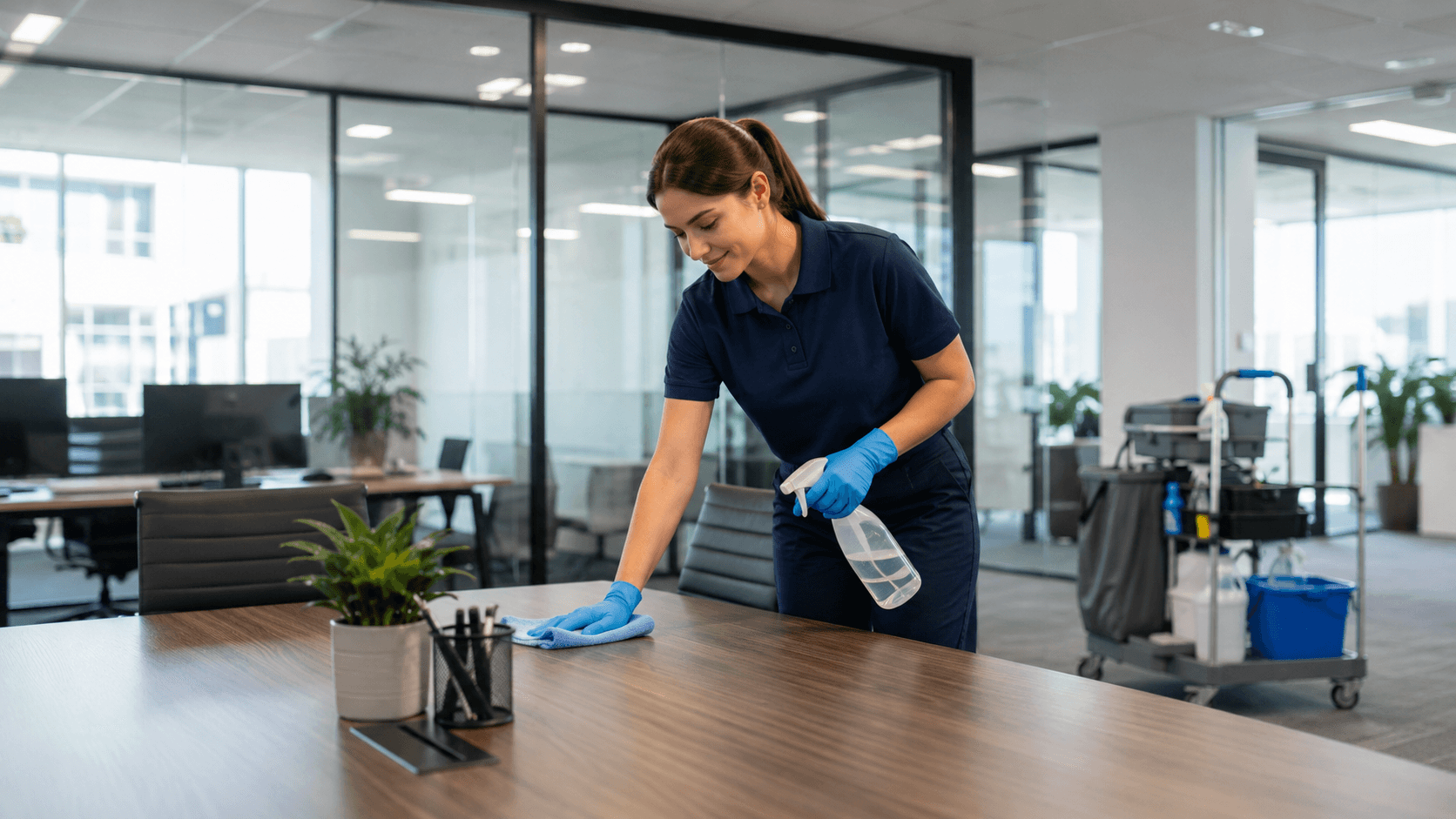
Introduction
A clean office is about more than appearances. Good office cleaning helps create a healthier, more organised and more professional workplace for your staff, visitors and clients.
For business owners, office managers and facilities managers, cleaning is often something that only gets noticed when standards slip. Bins are missed, washrooms run low on supplies, desks become dusty, floors start to look tired, and staff begin to complain. At that point, the cleaning contractor is no longer simply providing a service; they are affecting the day-to-day running of your business.
Whether you manage an office in London, West London, Middlesex, Surrey or Berkshire, the right cleaning schedule should be practical, consistent and suited to how your workplace is actually used.
This guide explains what professional office cleaning should include, the common issues businesses face, and what to look for if you are reviewing your current cleaning arrangements.
What Should Office Cleaning Include?
Every workplace is different, but a reliable office cleaning service should cover the areas that have the biggest impact on hygiene, presentation and staff comfort.
Typical office cleaning tasks may include:
- Emptying bins and replacing liners
- Cleaning desks, workstations and touchpoints
- Vacuuming carpets and entrance areas
- Mopping hard floors
- Cleaning kitchens and tea points
- Sanitising washrooms
- Replenishing consumables such as toilet rolls, hand towels and soap
- Cleaning internal glass and doors
- Dusting ledges, surfaces and office furniture
- Spot-cleaning marks where needed
The exact specification should depend on your office layout, number of staff, footfall and working patterns. A small office with 10 people will need a very different cleaning schedule from a busy multi-floor workplace with meeting rooms, kitchens, washrooms and daily visitors.
Why Regular Professional Cleaning Matters
1. It creates a better first impression
Your office says a lot about your business. Reception areas, meeting rooms, washrooms and shared kitchens are often seen by clients, suppliers and staff. If these areas look neglected, it can affect how professional and organised your business appears.
A clean workplace helps show that your company cares about standards.
2. It supports staff wellbeing
Staff spend a large part of their week at work. Dusty desks, overflowing bins, dirty kitchens or poorly maintained washrooms can quickly become frustrating.
Regular cleaning helps create a more comfortable working environment. It also supports basic hygiene, especially in shared areas where people touch the same handles, switches, kettles, taps and appliances throughout the day.
3. It helps reduce avoidable complaints
Many cleaning problems come from small tasks being missed repeatedly. One missed bin may not seem serious, but if it happens every week, staff quickly lose confidence in the cleaning service.
A structured cleaning schedule, supported by supervision and communication, helps prevent recurring issues.
4. It protects flooring and fixtures
Carpets, hard floors, washroom fittings and office furniture all last longer when maintained properly. Regular vacuuming, spot cleaning, deep cleaning and hard floor care can help reduce wear and avoid premature replacement costs.
This is especially important in high-traffic areas such as entrances, corridors, kitchens and breakout spaces.
Common Office Cleaning Problems Businesses Face
Cleaning hours no longer match the workplace
A cleaning schedule that worked three years ago may no longer be suitable. Staff numbers may have increased, hybrid working patterns may have changed, or certain areas may now be used more heavily.
If standards are slipping, it may not always be because the cleaner is doing a poor job. Sometimes the cleaning time simply no longer matches the size or use of the building.
High-footfall areas are not cleaned often enough
Entrances, kitchens, toilets and meeting rooms often need more attention than quieter areas. If the same time is spread too thinly across the whole site, the most important areas may not receive the level of cleaning they need.
A good office cleaning review should identify which areas need daily attention, which need periodic cleaning, and which can be maintained less frequently.
Poor communication
Cleaning works best when there is a clear route for feedback. If staff are reporting issues but nothing changes, frustration builds.
A reliable cleaning company should have a process for reporting, checking and resolving issues quickly.
Lack of cover
Holidays, sickness and staff changes can all affect cleaning standards. Businesses should ask how their cleaning contractor manages cover, especially for daily office cleaning.
If there is no proper cover plan, missed cleans can quickly become a regular problem.
Office Cleaning Services That May Be Needed Alongside Daily Cleaning
Daily office cleaning is usually the foundation of a clean workplace, but some tasks need to be planned separately.
Carpet cleaning
Office carpets collect dust, dirt and stains over time, particularly around desks, entrances and walkways. Periodic carpet cleaning helps freshen the workplace and extend the life of the flooring.
Window cleaning
Clean windows improve natural light and presentation. Depending on the building, window cleaning may be needed monthly, quarterly or on another agreed schedule.
Deep cleaning
Deep cleaning is useful for kitchens, washrooms, high-touch areas and spaces that need more detailed attention than a standard daily clean allows.
Washroom and hygiene services
Washrooms have a major impact on staff and visitor experience. Professional washroom services, feminine hygiene services and regular consumables supply help keep these areas clean, stocked and compliant.
Hard floor cleaning
Hard floors can become dull, marked or slippery if not maintained correctly. Periodic machine cleaning, polishing or floor care may be needed depending on the floor type.
Local Office Cleaning in London and the South East
Businesses across London, West London, Middlesex, Surrey and Berkshire often face different cleaning challenges.
A central London office may have high footfall, shared facilities and frequent client visits. A business park in Middlesex or Berkshire may need reliable early morning or evening cleaning. A larger site in Surrey may require a mix of daily cleaning, washroom services, consumables and periodic deep cleaning.
The key is to have a cleaning schedule built around the site, not a generic checklist.
What to Look for When Reviewing Your Office Cleaning Contractor
When reviewing your current office cleaning service, ask:
- Are cleaning standards consistent each week?
- Are high-use areas receiving enough attention?
- Are washrooms clean and properly stocked?
- Is there holiday and sickness cover?
- Are issues dealt with quickly?
- Is the cleaning specification still suitable?
- Are periodic tasks such as carpets, windows and deep cleaning being planned?
- Is there regular supervision or auditing?
If the answer to several of these questions is no, it may be time to arrange a cleaning review.
Request an Office Cleaning Review
If your current cleaning standards are not where they should be, or if your office has changed since your cleaning schedule was first agreed, a review can help identify what is working and what needs improving.
Swift Office Cleaning Services provides professional office cleaning and commercial cleaning across London, Middlesex, Surrey and Berkshire. We can review your current cleaning arrangements, recommend a practical specification and provide a clear quote based on your workplace.
To discuss your office cleaning requirements, request a cleaning review or ask for a no-obligation quote.
FAQs About Office Cleaning
How often should an office be cleaned?
Most offices benefit from daily cleaning, especially where staff are using kitchens, washrooms, desks and meeting rooms every day. Smaller or low-use offices may need fewer visits, but shared areas should still be cleaned regularly.
What is included in professional office cleaning?
Professional office cleaning usually includes bins, desks, floors, kitchens, washrooms, touchpoints and general presentation cleaning. The exact tasks should be agreed in a cleaning specification.
Do office cleaners provide consumables?
Many commercial cleaning companies can supply consumables such as toilet rolls, hand towels, soap, bin liners and hygiene products. This can help keep ordering simple and ensure washrooms remain stocked.
Why are my office cleaning standards dropping?
Standards may drop because the cleaning time is too low, the site has become busier, supervision is lacking, or the cleaning specification is outdated. A review can help identify the cause.
Can office cleaning be done outside working hours?
Yes. Many businesses prefer office cleaning to take place early in the morning or in the evening to avoid disruption. The best timing depends on access, security and how the workplace is used.